

Extending the HIPAA + AI Series
Artificial intelligence is rapidly transforming healthcare — from clinical documentation and diagnostics to patient communication and scheduling. But as AI adoption accelerates, HIPAA and AI compliance in 2026 has become a major concern for small and mid-sized clinics across Idaho.
The challenge is no longer whether to adopt AI, but how to use it responsibly without violating patient privacy or federal regulations. With stricter enforcement and evolving guidance expected in 2026, clinics must take a proactive, informed approach.
This guide breaks down what Idaho healthcare providers need to know to adopt AI securely, ethically, and compliantly.
1. AI Meets HIPAA: The Rules Haven’t Changed — but the Risks Have
HIPAA’s core requirements remain firmly in place. The Privacy Rule (45 CFR §164.502) and Security Rule (45 CFR §164.312) apply to all protected health information (PHI), including electronic PHI processed by AI systems.
If an AI tool:
- Reviews clinical notes
- Generates patient summaries
- Assists with diagnostics
- Trains on historical patient data
…it must meet the same safeguards as your EHR or practice management system.
As HIPAA Vault notes, AI can be compatible with HIPAA when appropriate technical, administrative, and contractual safeguards are in place for any AI system that touches PHI.
The key difference in 2026 isn’t the regulation — it’s the expanded risk surface created by AI models, integrations, and third-party vendors.
2. HIPAA Modernization in 2026: What Clinics Should Expect
The U.S. Department of Health and Human Services (HHS), through the Office for Civil Rights (OCR), has initiated a major regulatory push to modernize HIPAA for today’s threat landscape — including AI.
In March 2025, HIPAA Journal reported that the HHS Office for Civil Rights proposed the first major update to the HIPAA Security Rule in 20 years, emphasizing stronger risk management, encryption, and resilience for systems handling PHI, including AI.
Key updates outlined in the HIPAA Security Rule NPRM include:
- Mandatory technical asset inventories
- More rigorous Security Risk Assessments (SRAs)
- Enforced multi-factor authentication (MFA)
- Encryption requirements
- Vendor oversight and documentation
- Incident response and breach planning
- Network segmentation
- Backup and disaster recovery controls
Perhaps most importantly, enforcement is expected to focus heavily on the quality of SRAs — not checklist-based assessments, but real, documented risk analysis.
As artificial intelligence becomes more embedded in healthcare workflows, HIPAA and AI compliance in 2026 requires clinics to rethink how they approach cybersecurity and compliance.
3. AI’s Hidden HIPAA Compliance Pitfalls
AI introduces compliance challenges that many clinics underestimate.
Common risk areas include:
Vendor Accountability
Most AI tools are delivered by third parties. If a vendor touches PHI, a Business Associate Agreement (BAA) is mandatory — no exceptions.
Explainability and Auditability
Emerging guidance emphasizes the need for traceable AI decisions, documentation, and audit logs — especially for clinical or administrative recommendations.
De-Identification Isn’t Foolproof
“Anonymous” datasets can sometimes be re-identified when combined with other data sources, creating unexpected HIPAA exposure.
Preparedness Gaps
Industry reports suggest over 60% of healthcare organizations are not ready for stricter AI-related HIPAA enforcement in 2026.
4. The Idaho Perspective on AI in Healthcare
In Idaho, regulatory oversight adds another layer of responsibility. The Idaho State Board of Medicine has acknowledged both the promise and complexity of AI in clinical practice, emphasizing ethical use, transparency, and patient safety. The June 2025 newsletter reviews AI’s growing role in diagnostics and decision‑support and emphasizes balancing its benefits with ethical use, regulatory considerations, and patient safety in clinical practice.
For Idaho clinics — especially those serving close-knit communities — trust and compliance are inseparable. A single breach or compliance failure can have outsized reputational impact.

5. Action Steps for Idaho Clinics in 2026
To stay compliant with HIPAA and AI regulations in 2026, clinics should take the following steps:
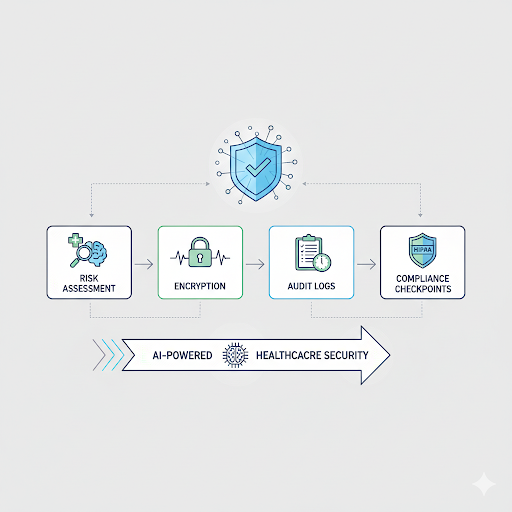
- Update Risk Assessments
Include all AI tools in your asset inventory and conduct detailed SRAs. - Strengthen Vendor Governance
Secure BAAs and document how vendors handle, store, and protect PHI. - Enforce Technical Safeguards
Implement MFA, encryption, access controls, and logging for AI workflows. - Establish Transparency Practices
Maintain explainability documentation and audit trails for AI-generated outputs. - Train Staff and Leadership
Ensure teams understand AI limitations, risks, and compliance responsibilities. - Monitor Regulatory Changes
Stay current with OCR, HHS, and Idaho-specific guidance as enforcement evolves.
Conclusion: AI Is a Tool — Not a Shortcut
AI can deliver meaningful operational and clinical benefits, but it does not replace compliance discipline. In 2026, successful clinics will be those that balance innovation with transparency, security, and patient trust.
For Idaho healthcare providers, doing this right protects not only data — but reputation and community confidence.
Many Idaho clinics rely on experienced managed IT services to ensure AI tools are deployed securely, monitored continuously, and aligned with HIPAA requirements.
At MOATiT, we help local clinics adopt AI safely and responsibly. From HIPAA risk assessments to AI security controls, MOATiT provides a full range of IT services designed to help Idaho clinics innovate safely.
👉 Talk with MOATiT about HIPAA and AI readiness for your clinic.


