
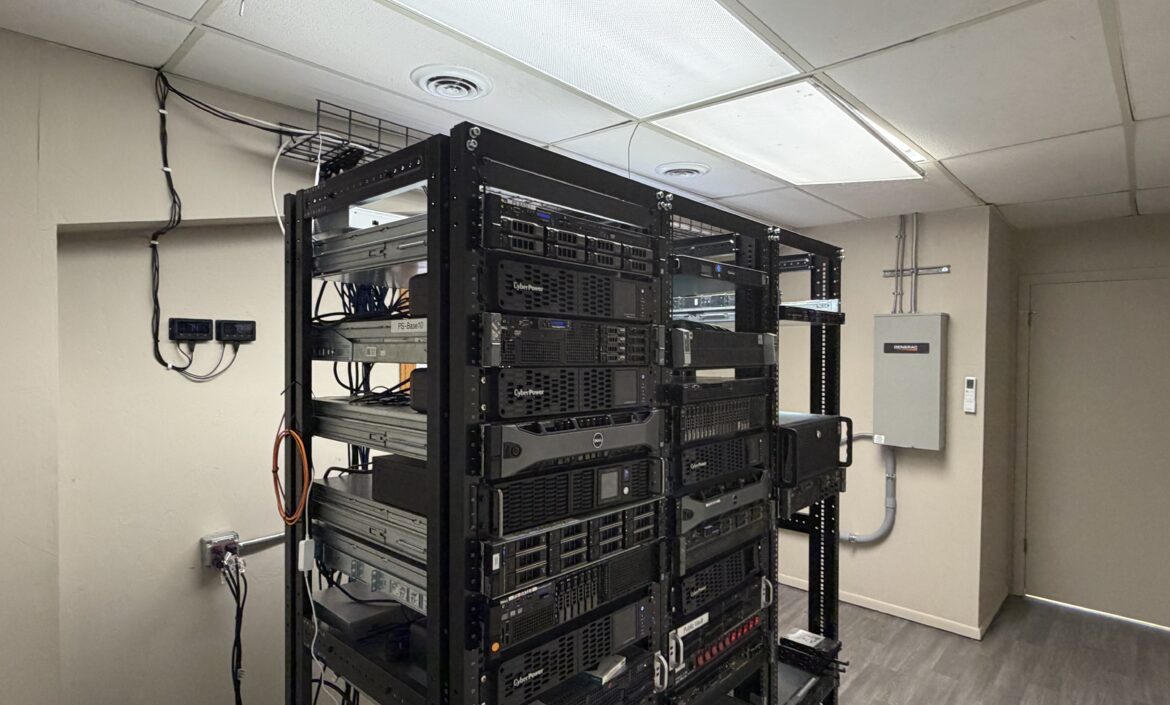
Idaho data centers are at the center of one of the most important technology debates in Southeast Idaho right now, and most of the conversation is built on outdated information. When Ali Khan, CEO and Founder of MOATiT, joined Newstalk 107.9 to discuss the realities of data center development in Pocatello and the broader region, he cut through the noise with facts, engineering expertise, and a clear vision for Idaho’s economic future.
If you’ve heard concerns about water consumption, electricity rates, or job creation, this article addresses every one of them with the kind of technical clarity that only a CEO who has built and operated data centers firsthand can provide.
Listen to the Full Interview with Ali Khan
Ali Khan, CEO and Founder of MOATiT, joined Neil Larson and Julie Mason on Newstalk 107.9 to discuss Idaho data centers live on air. Listen to the complete conversation below, then read the key takeaways in the article.
— CEO ALI Khan
Also available on Newstalk 107.9: This interview was originally broadcast on Newstalk 107.9. Listen or read along on their website at https://www.buzzsprout.com/2390029/episodes/19362359
Table of Contents
- What Is a Data Center—and Why Does Idaho Need One?
- 1. Idaho Data Centers Are Already Behind Demand
- 2. The Closed-Loop Water Truth (Less Than Your Neighbor Uses)
- 3. Power Consumption—Surplus Gas and a Nuclear Renaissance
- 4. Real Jobs, Real Income—The Economic Ripple Effect
- 5. AI Needs Local Compute—The Idaho Pricing Advantage
- 6. The Hoku Site—Can It Work?
- 7. Community Trust Is the Only Path Forward
- About MOATiT
- SEO Link References
What Is a Data Center—and Why Does Idaho Need One?
A data center is a facility that stores and processes the servers, networking equipment, and computing infrastructure that power modern digital services—from cloud storage and business software to artificial intelligence and secure communications.
For MOATiT, the journey into data center operations started locally. The company needed reliable backup solutions and secure storage for its Southeast Idaho clients. Over 13–14 years, that infrastructure evolved into a full-stack technology platform supporting cloud services, VoIP phone systems, AI applications, and managed IT services, all housed under one roof.
The key advantage? Local control. When data stays in Idaho, businesses benefit from lower latency, better security compliance, and “Idaho Pricing” competitive rates that national giants like Amazon or Google simply can’t match for regional clients.
1. Idaho Data Centers Are Already Behind Demand
One of the most striking points Ali Khan made during his interview is that the traditional “build it and they will come” approach no longer applies to data centers. The situation has reversed:
“We are actually behind the demand that is coming in. And the demand is being created right now by enterprises in the majority of the cases. So I think we will run out of compute power very fast.”
The explosive growth of AI tools, cloud platforms, and enterprise software means that the need for Idaho data centers is not speculative; it’s already here. Businesses, healthcare providers, government agencies, and educational institutions across Southeast Idaho all need secure, local infrastructure to process increasing volumes of data.
This makes the conversation about data centers in Idaho not a question of “if” but “how fast” and how responsibly.
2. The Closed-Loop Water Truth (Less Than Your Neighbor Uses)
Water use is the concern Khan hears most often, and it’s the one where public perception is furthest from current reality.
Old Technology vs. Modern Idaho Data Centers
Older, evaporative-cooling data centers could consume between 5 million and 500 million gallons of water per year. That’s the number people imagine when they hear “data center.”
But modern Idaho data centers use closed-loop cooling systems, and the difference is dramatic.
| Technology Type | Water Source | Annual Usage |
| Old Evaporative Cooling | Municipal water supply (consumed) | 5M–500M gallons/year |
| Modern Closed-Loop System | Recycled glycol/deionized water | 500K–700K gallons/year |
| Average Idaho Household | Municipal supply | ~100K–200K gallons/year (est.) |
“Closed-loop water systems work just like your car’s radiator. A mixture of deionized water and glycol circulates through the servers and keeps cycling inside the data center. It doesn’t go out unless there is a leakage—and you refill it just like your car.” — Ali Khan, CEO, MOATiT
Khan built his first closed-loop cooling system in 2021, and it’s still running. He notes that virtually every modern Idaho data center built in the last year or two uses this technology because it’s more cost-effective, lower maintenance, and better suited for high-performance AI workloads.
Bottom line: a modern Idaho data center may use less water annually than a few homes on your block.
3. Power Consumption—Surplus Gas and a Nuclear Renaissance
The second major concern for Idaho communities is electricity, specifically, whether Idaho data centers will spike utility rates or strain the grid. Khan’s answer draws on infrastructure that already exists and technology that is actively being developed.
The Hoku Plant’s Hidden Asset
The former Hoku plant in Pocatello already has 110 megawatts of grid infrastructure in place—built 20 years ago and waiting to be modernized. Rather than building expensive new power connections from scratch, a data center at this site would upgrade existing infrastructure, which is a significantly lower-cost approach.
Idaho’s Untapped Natural Gas Surplus
Idaho currently uses only 24–35% of its available natural gas capacity. Gas turbine-based generation tapping this surplus could add power to the grid without creating new pipeline infrastructure and could actually help reduce electricity costs overall.
Small Modular Reactors (SMRs) and INL’s Nuclear Renaissance
Perhaps the most forward-looking element of this conversation is the relationship between Idaho data centers and the Idaho National Laboratory (INL). INL is at the forefront of developing Small Modular Reactors (SMRs), compact nuclear reactors capable of powering entire cities from just two acres of land, with no greenhouse gas emissions and no water requirements.
The connection to data centers? INL needs massive compute power to run the simulations required to design these reactors faster and smaller. And those future reactors, in turn, will provide clean, carbon-free electricity to power the very data centers enabling the research.
It’s a genuine technology loop: Idaho data centers fuel the nuclear renaissance, and the nuclear renaissance powers Idaho data centers.
4. Real Jobs, Real Income—The Economic Ripple Effect
A 100-megawatt Idaho data center directly employs approximately 100 people. These aren’t temporary construction roles, they’re permanent, well-paying positions in roles including:
- Network and systems engineers
- Electrical technicians and facilities managers
- Cybersecurity and operations specialists
- Administrative and support staff
But the direct employment number is only the beginning. Khan emphasized the indirect economic impact:
Permanent Supporting Industries
- Electricians and plumbers (needed for as long as the facility operates)
- HVAC specialists and equipment suppliers
- Construction contractors for future expansions
- ISP and fiber connectivity providers
- Professional services firms
The ISU Brain Drain Problem—and a Solution
Khan highlighted a painful reality: approximately 97% of Idaho State University graduates currently leave the region after completing their degrees. Southeast Idaho’s average income is already 20% below the rest of the state.
Studies suggest that a single data center can increase a local community’s average income by 5–10%. For a region that is 20 percentage points behind, that’s not just growth—that’s a genuine opportunity to close a gap that has persisted for decades.
When high-tech, high-paying roles exist locally, graduates have a reason to stay.
5. AI Needs Local Compute—The Idaho Pricing Advantage
Every AI application, from a chatbot to a medical diagnostic tool, requires significant computing resources to train models, process data, and deliver results. As AI adoption accelerates across every sector, local compute infrastructure is no longer a luxury; it’s a competitive necessity.
Khan describes “Idaho Pricing” as the ability for local organizations to access premium AI and cloud computing capacity at rates that national providers simply cannot match for regional clients. MOATiT serves clients, including the City of St. Anthony, Farm Bureau Insurance, Comfort Dental, and Idaho Kidney—organizations that need:
- Secure, isolated computing environments (no shared infrastructure with outside parties)
- Hybrid cloud solutions that keep sensitive data within Idaho
- Low-latency access to AI tools and business applications
- Compliance-friendly infrastructure for healthcare and government clients
In an era of increasing data privacy concerns, local Idaho data centers offer something global providers structurally cannot: data sovereignty. Your data stays in Idaho, processed by people who live here.
6. The Hoku Site—Can It Work?
The former Hoku polysilicon plant has become the focal point of Pocatello’s data center debate. Khan’s assessment is measured but ultimately optimistic with important conditions.
From a technical standpoint, the site has real advantages: existing 110MW grid infrastructure, industrial-scale cooling capacity, and sufficient land area. The main engineering concerns, water use, noise, and power, are all addressable through proper planning and contractual requirements.
“The noise, the water, and power—all three can be addressed very easily if it’s properly planned. And it will bring a lot of resources.” — Ali Khan, CEO, MOATiT
The complexity lies in the development process itself. Data centers are often built by developers who then sell to large technology companies, meaning the technology commitments made at the contract stage may shift during the project lifecycle. This is why Khan emphasizes the importance of specific, enforceable requirements in the city’s permitting process—not general assurances.
His recommendation: the city and county must negotiate directly, require specific technology disclosures, and protect the community through contractual obligations rather than assuming goodwill.
7. Community Trust Is the Only Path Forward
Perhaps the most important insight from Ali Khan’s interview wasn’t technical at all. It was about how the technology industry needs to change the way it communicates with the communities it wants to operate in.
“The IT people need to come out of their computer engineer mode and go into community service mode. We need to actually work with the community, build the relationship, and serve the community. I think IT companies have shied away from this and, in my personal opinion, we have failed very badly to keep the community in the loop on new technologies.” — Ali Khan
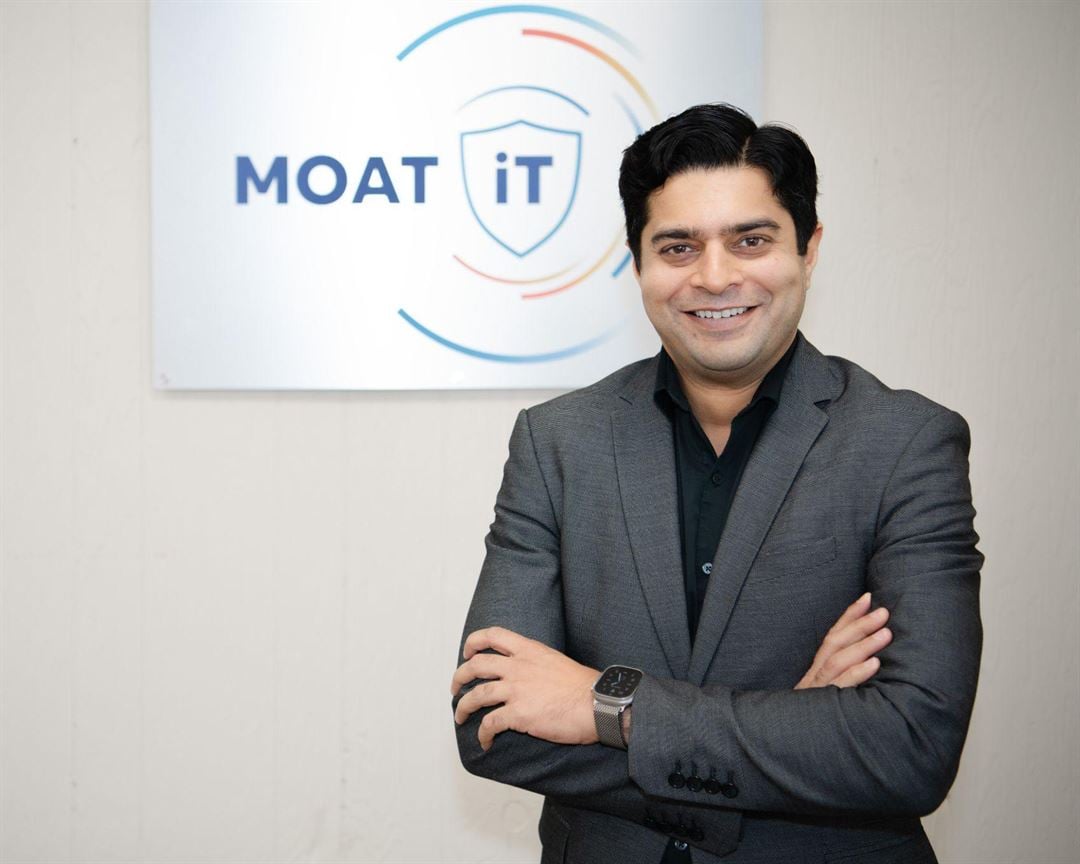
This is a candid and important admission. The speed of technological change has outpaced public education on the subject. New developments emerge weekly, making it nearly impossible for the average resident to evaluate claims made by developers or critics.
Khan’s framework for community engagement with Idaho data centers:
- Stay curious, not judgmental—ask specific questions about technology and contracts
- Require transparency on water technology, cooling systems, and power sources
- Insist on enforceable environmental protections in permitting agreements
- Demand clear commitments on noise levels and community impact
- Evaluate long-term economic benefits alongside short-term concerns
The conversation about Idaho data centers is not over. But the communities that will benefit most are the ones that engage with expertise rather than anxiety, and that set clear standards rather than blanket opposition.
Looking Ahead: Idaho’s Technology Future
Idaho data centers represent more than just server farms. They are the foundation of a technology ecosystem that could retain local talent, attract high-paying jobs, power the next generation of nuclear energy research, and give Idaho businesses the AI computing capabilities they need to compete—at Idaho prices.
The question isn’t whether this technology is coming to Southeast Idaho. It’s whether Idaho communities will shape how it arrives—or simply react to it after the fact.
MOATiT is committed to being part of that conversation—as a technology provider, a community member, and a resource for anyone who wants to understand what modern data center infrastructure actually means for Idaho’s future.
About MOATiT
MOATiT is Southeast Idaho’s leading managed IT services provider—delivering cybersecurity, cloud solutions, AI consulting, business communications ( VoIP), and infrastructure management for organizations across the region. With over a decade of local data center operations, MOATiT brings the technical depth and community commitment that Idaho businesses deserve.


